
Hydration, Partial Hydration & Islands
Hydration, Partial Hydration & Islands
Why JavaScript Is becoming Bottleneck
Modern frontend discussions often focus on rendering strategies - CSR, SSR, static generation, and streaming. These determine when and where HTML is produced.
But once HTML reaches the browser, a second and often more expensive phase begins: execution.
Hydration sits at the center of that phase.
To understand why JavaScript has become the real bottleneck in many applications, we need to examine what hydration does, why full hydration scales poorly, and how partial hydration and islands architecture emerged as structural corrections rather than optimizations.
Rendering Is Not Interactivity
When using server-side rendering with frameworks such as React or Next.js, the browser receives fully rendered HTML. The page becomes visible quickly. Content paints. Layout stabilizes.
At this stage, however, the UI is not interactive.
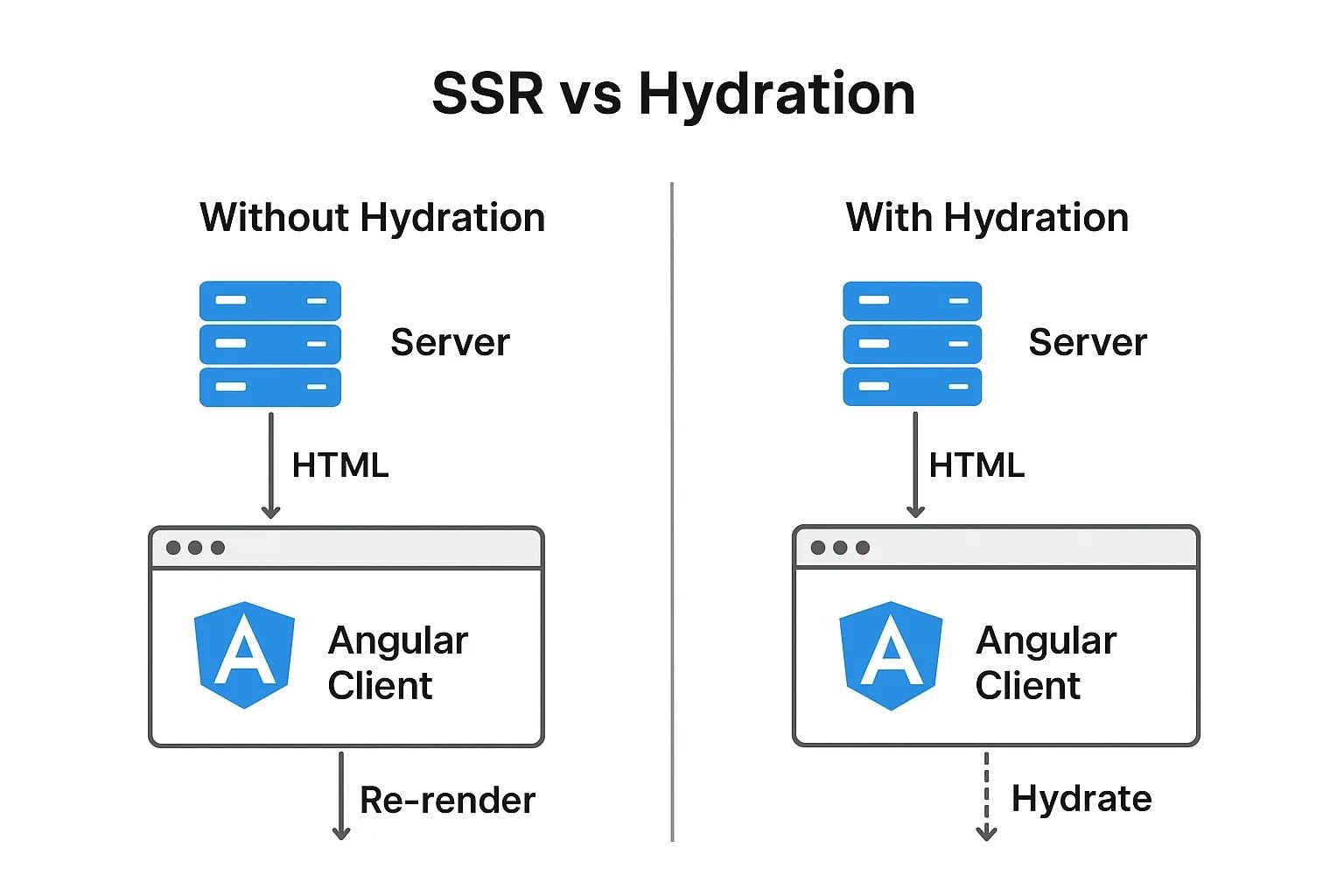
Hydration is the process by which the client-side JavaScript runtime reconstructs the component tree, reconciles it with the existing DOM, and attaches event listeners. In practical terms, this means the browser downloads the JavaScript bundle, parses it, compiles it, executes the framework runtime, and replays the application logic on the main thread.
Only after this completes does the interface respond reliably to user input.
The rendering phase produces pixels. Hydration produces behavior.
Those are distinct operations with very different cost profiles.
The Cost of Replaying the Application
Hydration is expensive not because it is conceptually complex, but because it executes on constrained hardware.
Unlike servers running in controlled cloud environments, browsers execute on heterogeneous devices - mid-range Android phones, older laptops, and battery-constrained tablets. All hydration work runs on the main thread, which is responsible for layout, paint, input handling, and script execution.
The cost includes:
-
Transferring JavaScript over the network
-
Parsing and compiling the bundle
-
Executing the framework runtime
-
Reconstructing component state
-
Traversing the DOM for reconciliation
While network performance has improved significantly due to CDNs and compression, CPU improvements on low-end devices have not kept pace with the increasing complexity of frontend frameworks.
The result is a widening gap between “content visible” and “application usable.” That gap is hydration time.
The following diagram illustrates this timeline difference:
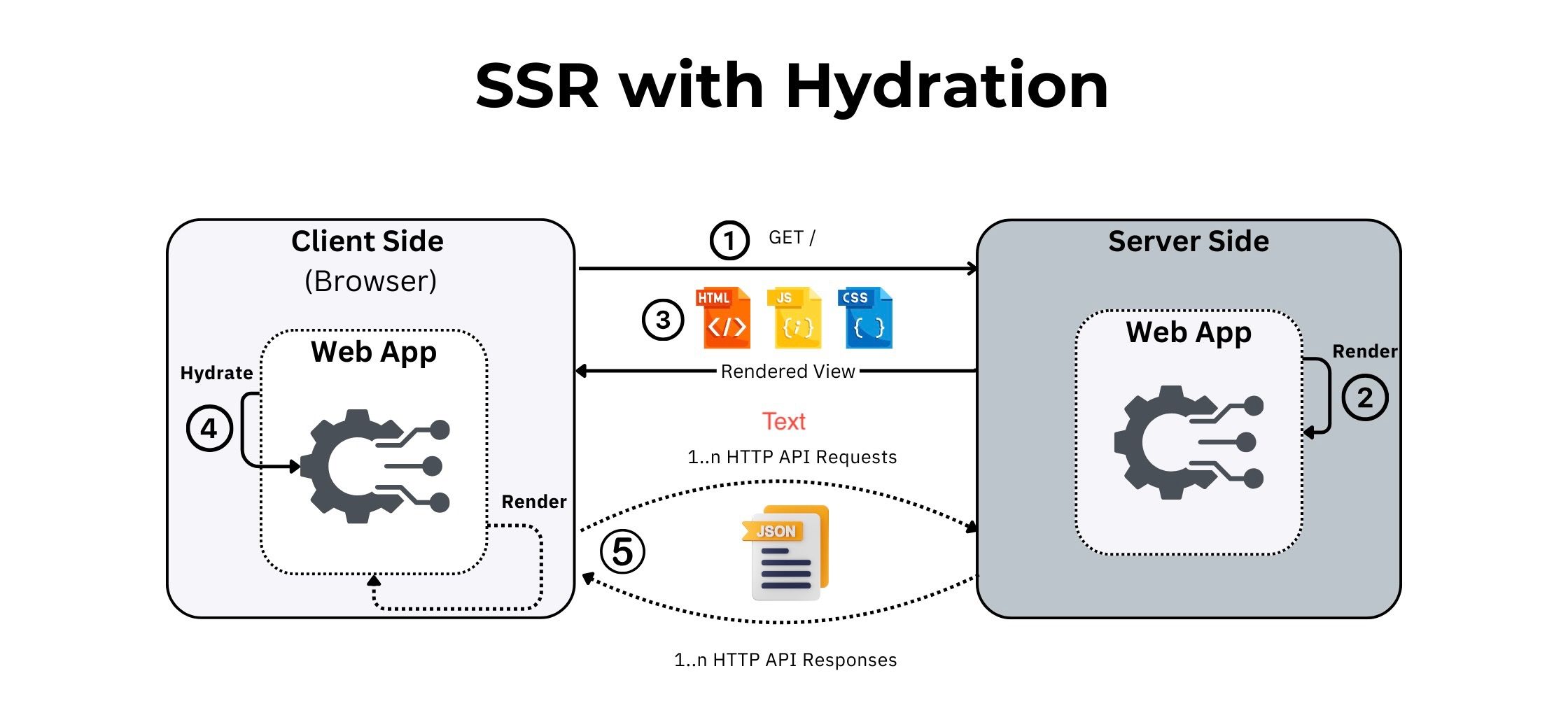
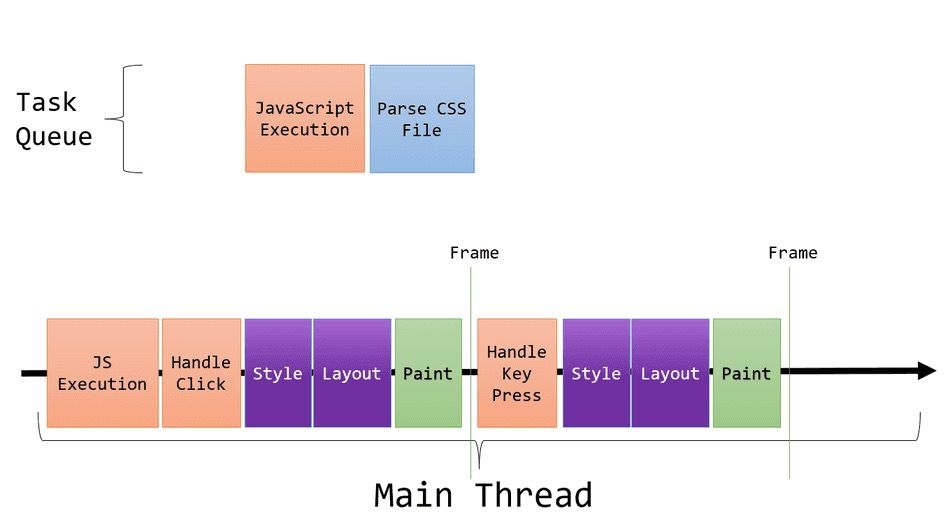
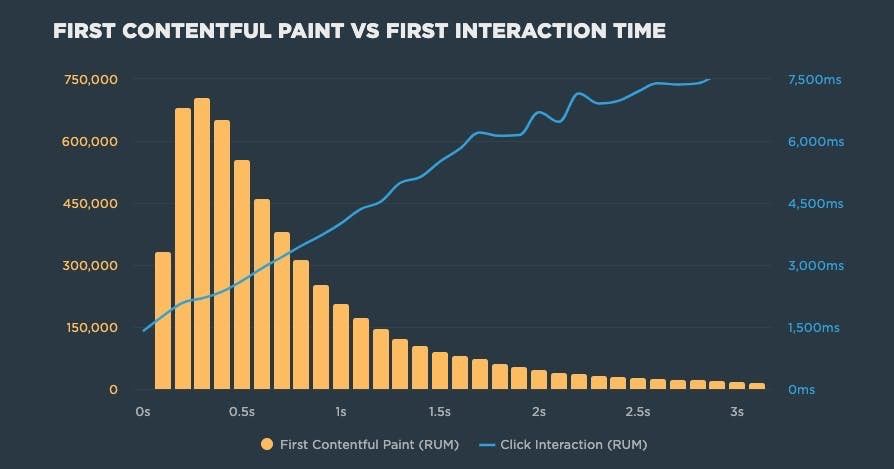
In many real-world audits, Time to First Byte and Largest Contentful Paint appear healthy, yet Time to Interactive remains delayed. The cause is rarely rendering. It is almost always JavaScript execution.
The Structural Limitation of Full Hydration
Early server rendered React applications retained a single assumption inherited from SPA architecture: the entire page is an application.
When SSR was introduced, it improved initial paint performance but did not alter that assumption. The full component tree was still hydrated on the client, regardless of how much of it required immediate interactivity.
Consider a typical e-commerce product page. The product description, specifications, and static imagery require no dynamic logic. Yet in a fully hydrated model, those sections still participate in the client-side component tree. They incur parsing cost, execution cost, and memory allocation.
This is not an optimization problem. It is a modeling problem.
When everything is treated as interactive by default, JavaScript becomes a structural tax on all content.
Partial Hydration as Architectural Refinement
Partial hydration reframes the problem.
Instead of assuming that the entire page must become interactive simultaneously, it isolates only the components that require interactivity and hydrates them selectively.
Static regions remain static. Interactive regions become active when necessary — sometimes immediately, sometimes lazily.
This reduces the total JavaScript surface area that must execute during startup. It also lowers main-thread contention, improving responsiveness under real-world device constraints.
The shift is subtle but foundational: the page is no longer a monolithic application. It is a document with interactive regions.
The following conceptual model demonstrates this separation:
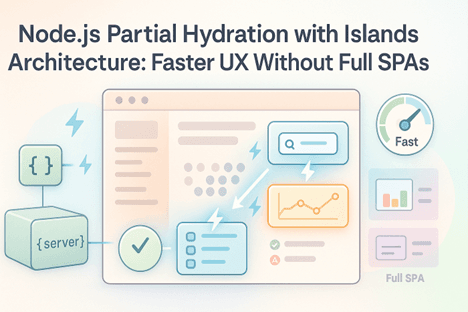
The benefit is not merely smaller bundles. It is controlled execution.
Islands Architecture: Making Interactivity Explicit
Islands architecture formalizes this separation.
In this model, the default output is static HTML. Interactive components exist as isolated “islands” that load and hydrate independently. Each island owns its JavaScript boundary and executes only when required.
Frameworks such as Astro popularized this model, but the underlying principle is broader than any single tool.
Interactivity becomes opt-in rather than assumed.
This changes how developers reason about pages. Instead of asking, “How do we optimize this large application?” the question becomes, “Which parts of this page genuinely require runtime behavior?”
That distinction directly reduces hydration cost.
Device Reality and Global Scale
From a systems perspective, hydration distributes computation to millions of client devices.
Every kilobyte shipped and every millisecond of main-thread execution scales multiplicatively across your user base. On high-end devices, the cost may be tolerable. On lower-end hardware, the same workload can produce perceptible delay, input lag, and reduced responsiveness.
For global applications, this variability is not theoretical. It affects conversion, retention, and accessibility.
JavaScript execution time is therefore not a cosmetic concern. It is an architectural constraint.
When Full Hydration Is Appropriate
There are classes of applications where full hydration is entirely justified. Real-time dashboards, collaborative design tools, financial trading interfaces, and highly dynamic internal systems require rich client-side state and continuous interaction.
In such cases, the interface itself is the application. Reducing hydration is neither practical nor aligned with product requirements.
The key distinction lies in whether the page is primarily content with interaction, or primarily interaction with content.
Architecture should reflect that reality.
The Strategic Shift
The industry’s movement toward streaming, server components, and edge-based rendering is not accidental. These innovations share a common objective: reduce the amount of JavaScript that must execute on the client.
Even within React, server-oriented patterns increasingly move logic away from the browser, shrinking the hydration surface area.
The broader architectural trend is clear.
Rendering is relatively inexpensive at scale. Execution is not.
Modern frontend systems are gradually converging on a principle that resembles early web fundamentals, but implemented with contemporary rigor:
Default static output. Introduce interactivity deliberately. Treat client-side JavaScript as a constrained resource.
Closing Perspective
Hydration is not inherently problematic. It is necessary for interactive applications built on component-based frameworks.
The problem emerges when hydration is applied indiscriminately.
When every pixel carries runtime overhead, performance ceilings are imposed by the weakest device in your audience. Partial hydration and islands architecture are not stylistic trends; they are structural responses to that constraint.
Understanding this distinction is essential for engineers designing systems that scale globally, perform reliably across devices, and remain maintainable over time.
Rendering determines what users see.
Hydration determines when they can act.
In modern frontend architecture, that difference defines performance.
About the Author

Tarun Jat
Tarun is a skilled frontend developer at Infominez specializing in React and React Native, focused on building clean and intuitive digital experiences.
About the Author
Tarun Jat
Tarun is a skilled frontend developer at Infominez specializing in React and React Native, focused on building clean and intuitive digital experiences.