
Frontend Is No Longer Just UI : It’s Infrastructure
Frontend Is No Longer Just UI : It’s Infrastructure
For a long time, frontend development was seen as the final layer of an application, responsible for presentation, styling, and basic user interaction. The real “engineering” work was believed to live on the backend.
That mental model is no longer accurate.
Modern frontend applications now participate directly in system architecture, performance, scalability, and reliability. In many cases, frontend decisions determine whether an application feels fast, resilient, and usable, or slow and fragile.
Frontend has evolved into infrastructure.
The Traditional View of Frontend
Historically, frontend responsibilities were limited:
-
Rendering static HTML and CSS
-
Adding JavaScript for interactions
-
Calling backend APIs for data
-
Delegating performance and scalability concerns to servers
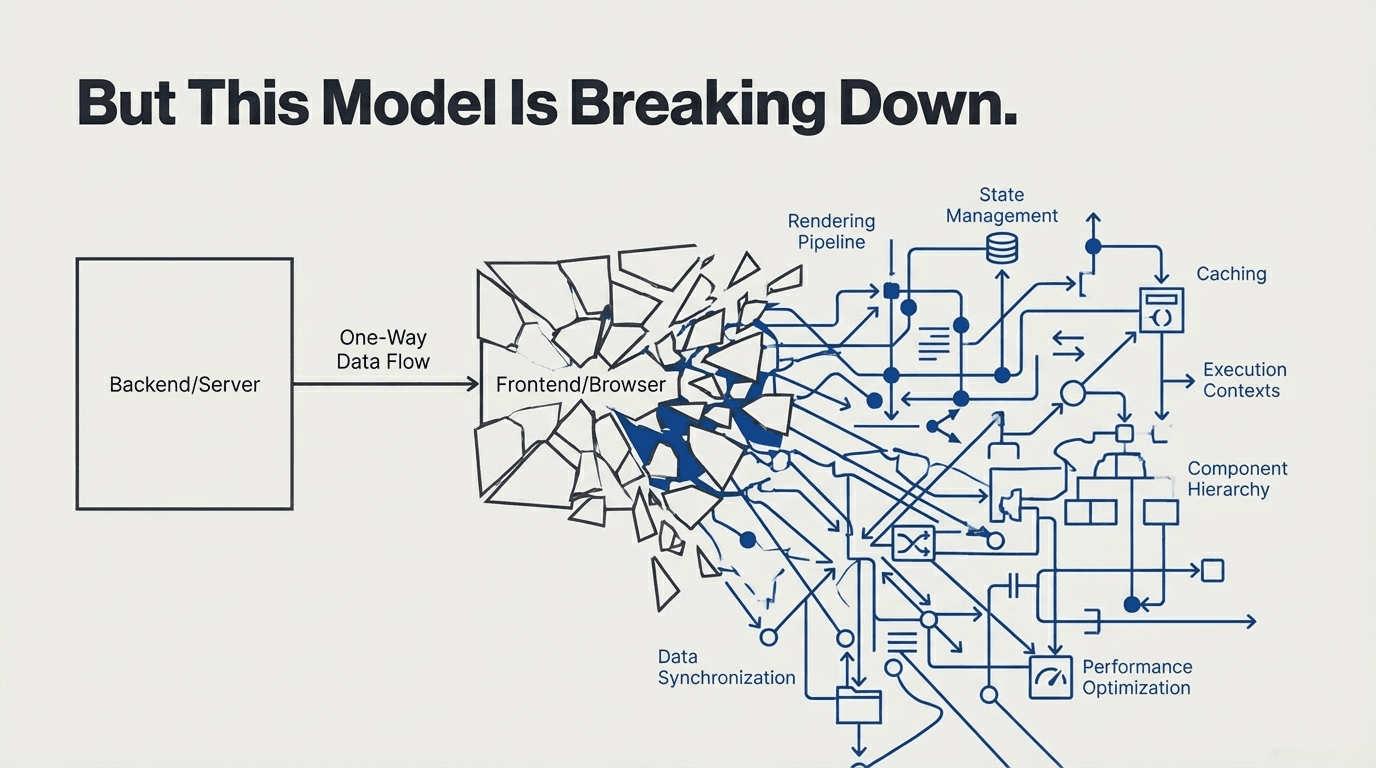
The underlying assumption was simple:
Backend builds the system.
Frontend presents it.
This separation worked well when applications were relatively simple and network conditions were predictable.
What Changed: The Web Became an Application Platform
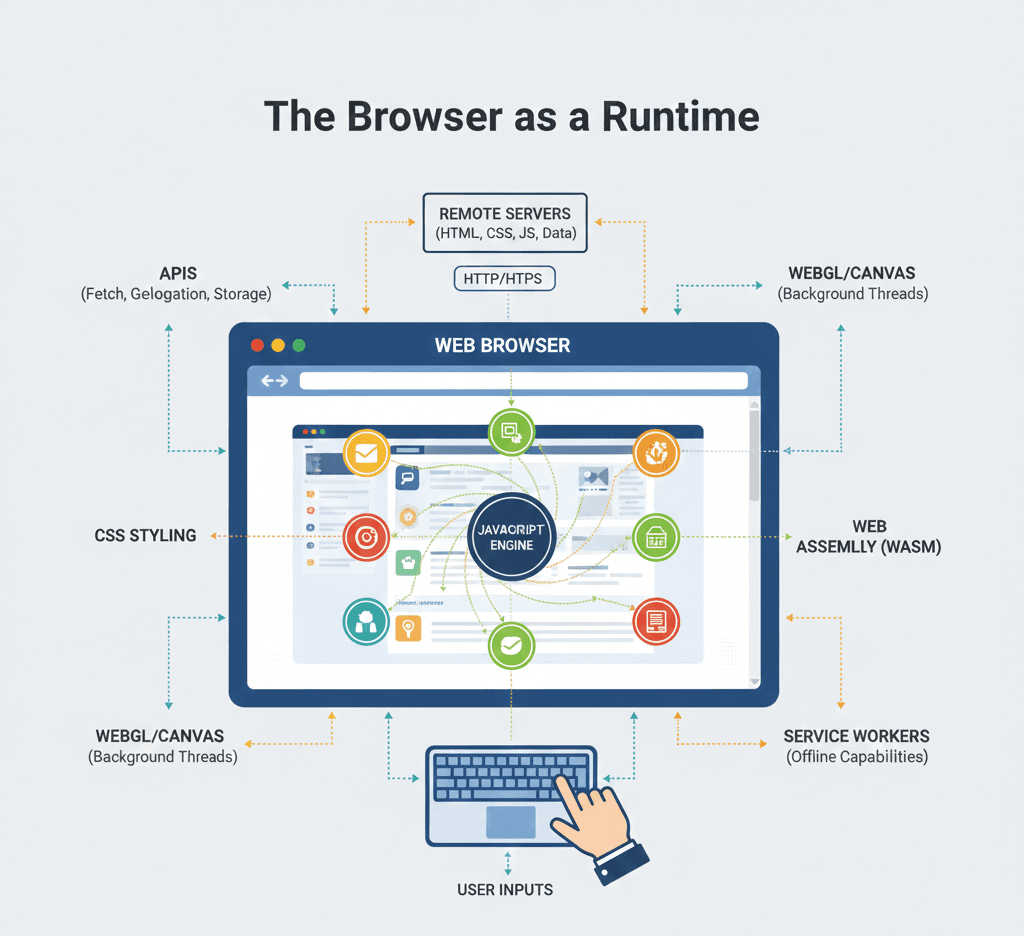
The modern web is no longer document-centric — it is application-centric.
Browsers today are capable of:
-
Executing complex JavaScript applications
-
Managing memory and multi-threaded execution
-
Handling client-side caching and persistence
-
Coordinating sophisticated rendering pipelines
-
Communicating directly with CDNs and edge networks
In effect, the browser has become a runtime environment, not just a rendering surface. This shift fundamentally changes the role of frontend engineering.
Performance Is Now Frontend-Driven
User-perceived performance is no longer determined solely by server response time.
Metrics such as:
-
Largest Contentful Paint (LCP)
-
Interaction to Next Paint (INP) / Time to Interactive (TTI)
-
Cumulative Layout Shift (CLS)
are heavily influenced by frontend behavior.
Factors like JavaScript bundle size, hydration cost, rendering strategy, and data-fetching patterns often dominate performance outcomes. Even a highly optimized backend cannot compensate for inefficient frontend architecture.
As a result, performance is increasingly a frontend responsibility.
Rendering Has Become a System Decision
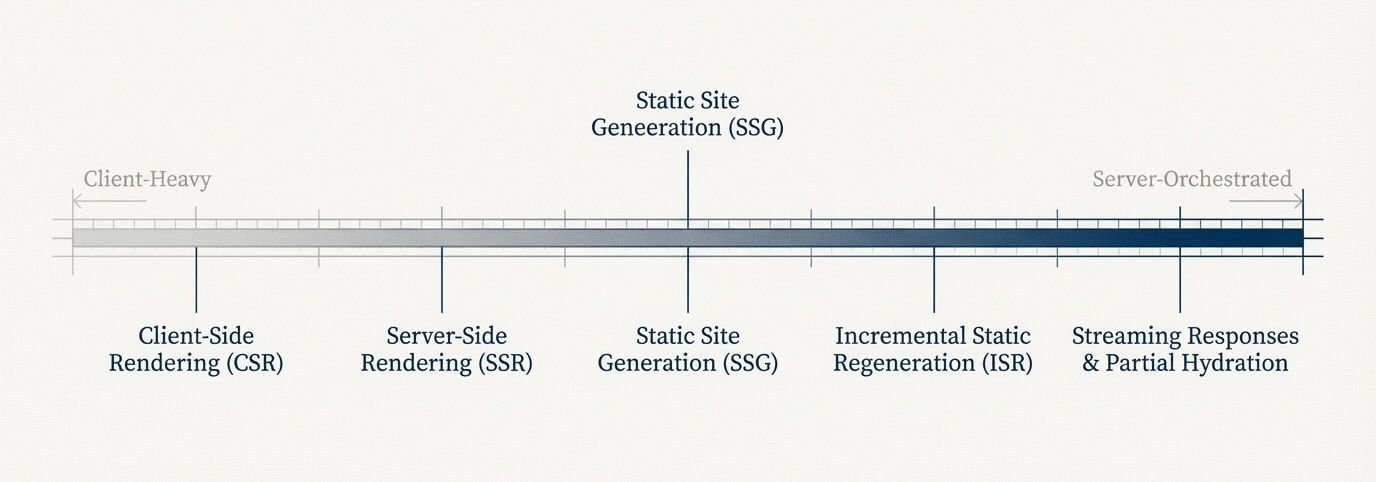
Modern frontend frameworks support multiple rendering models:
-
Client-Side Rendering (CSR)
-
Server-Side Rendering (SSR)
-
Static Site Generation (SSG)
-
Incremental Static Regeneration (ISR)
-
Streaming responses
-
Partial hydration and islands architecture
Each approach introduces different trade-offs in terms of performance, scalability, SEO, and infrastructure cost. Choosing a rendering strategy is no longer a UI concern — it is a system-level architectural decision.
What Does “Frontend as Infrastructure” Mean?
When we describe frontend as infrastructure, we are acknowledging that frontend systems now manage responsibilities traditionally associated with backend platforms:
-
Rendering pipelines and execution strategies
-
Caching and data invalidation
-
Data orchestration and synchronization
-
Progressive loading and failure handling
-
Offline behavior and resilience to poor networks
These are not cosmetic concerns. They define how the system behaves under real-world conditions.
The Technical Layers of Modern Frontend Infrastructure
Rendering Layer
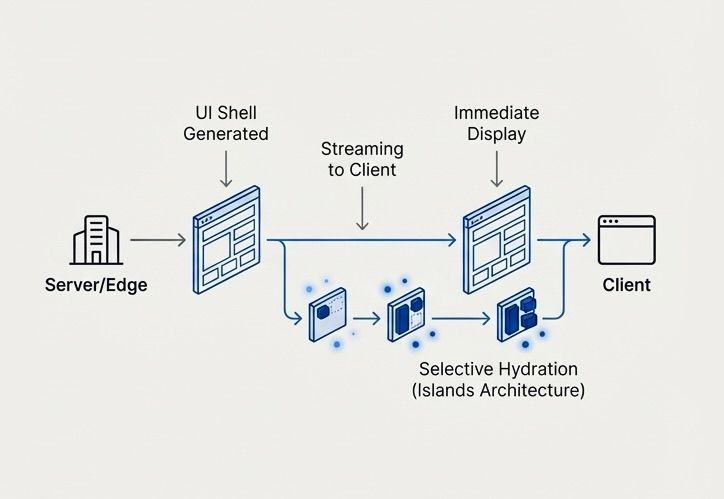
Modern frontends control how and where UI is generated:
-
Server Components
-
Streaming SSR
-
Islands architecture
-
Partial or delayed hydration
These techniques reduce JavaScript execution, improve perceived performance, and enhance SEO.
Data Layer
State management has evolved from local UI state to distributed data orchestration:
-
Server state vs client state
-
Caching as a first-class concept
-
Optimistic updates
-
Offline-first synchronization
In many cases, the frontend becomes the coordinator of distributed data flows.
Execution Layer
Frontend execution now spans multiple environments:
-
Browser main thread
-
Web Workers
-
Edge runtimes
-
Emerging WebAssembly pipelines
Managing where code executes is a critical performance and scalability decision.
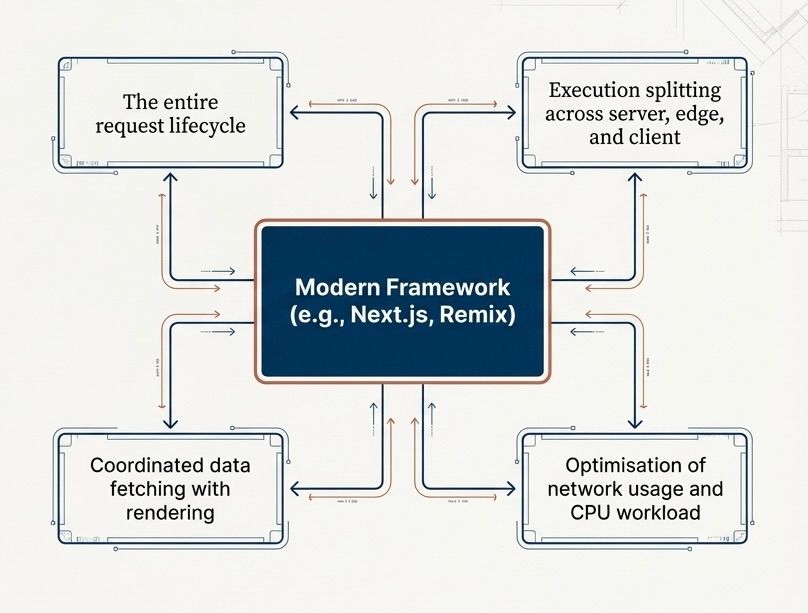
Frameworks Reflect This Evolution
Modern frontend frameworks are no longer simple UI abstractions. They:
-
Manage request lifecycles
-
Split execution across server, edge, and client
-
Coordinate data fetching with rendering
-
Optimize network usage and CPU workload
This is infrastructure orchestration, not UI composition.
The increasing complexity of frameworks reflects the growing complexity of the problem space they address.
Why This Shift Matters for Businesses
Frontend architecture directly impacts business outcomes:
-
Faster experiences increase conversion rates
-
Better rendering improves search visibility
-
Efficient delivery reduces infrastructure costs
-
Resilient UX builds user trust and retention
Frontend decisions increasingly influence revenue, growth, and brand perception.
Why This Shift Matters for Developers
For developers, this evolution changes the skill set required for long-term growth.
Understanding frontend as infrastructure enables engineers to:
-
Design scalable systems
-
Make informed architectural trade-offs
-
Collaborate more effectively with backend and platform teams
-
Grow into senior, lead, or architect roles
UI expertise alone is no longer sufficient in modern frontend engineering.
The Direction Frontend Is Heading
The trajectory of frontend development is clear:
-
Server-first rendering models
-
Reduced JavaScript payloads
-
Optional or partial hydration
-
Edge-first execution strategies
-
Increased adoption of WebAssembly
Frontend systems are becoming distributed, performance-critical infrastructure.
Closing Thoughts
Frontend defines how users experience a system — not just visually, but behaviorally and performance-wise.
Treating frontend as infrastructure leads to:
-
better system design
-
better user experiences
-
more resilient products
The future of frontend engineering lies not in building prettier components, but in architecting how the system feels to the user.
What’s Next in the Series
CSR vs SSR vs SSG vs ISR — explained like a system designer
About the Author

Tarun Jat
Tarun is a skilled frontend developer at Infominez specializing in React and React Native, focused on building clean and intuitive digital experiences.
About the Author
Tarun Jat
Tarun is a skilled frontend developer at Infominez specializing in React and React Native, focused on building clean and intuitive digital experiences.