
CSR vs SSR vs SSG vs ISR
CSR vs SSR vs SSG vs ISR
Explained the Way a System Designer Thinks
The problem we’re solving
When users open a webpage, something somewhere has to turn data into HTML.
That “somewhere” could be:
-
the browser
-
the server
-
the build pipeline
-
or a background regeneration system
All rendering strategies—CSR, SSR, SSG, ISR—are simply different answers to one question:
When, where, and at what cost should HTML be produced?
Once you see this, the topic stops being confusing.
Start from the simplest mental model
Imagine this pipeline:
Data → HTML → User
The only thing that changes across strategies is who performs this transformation and when it happens.
Client-Side Rendering (CSR):
“HTML is created inside the browser”
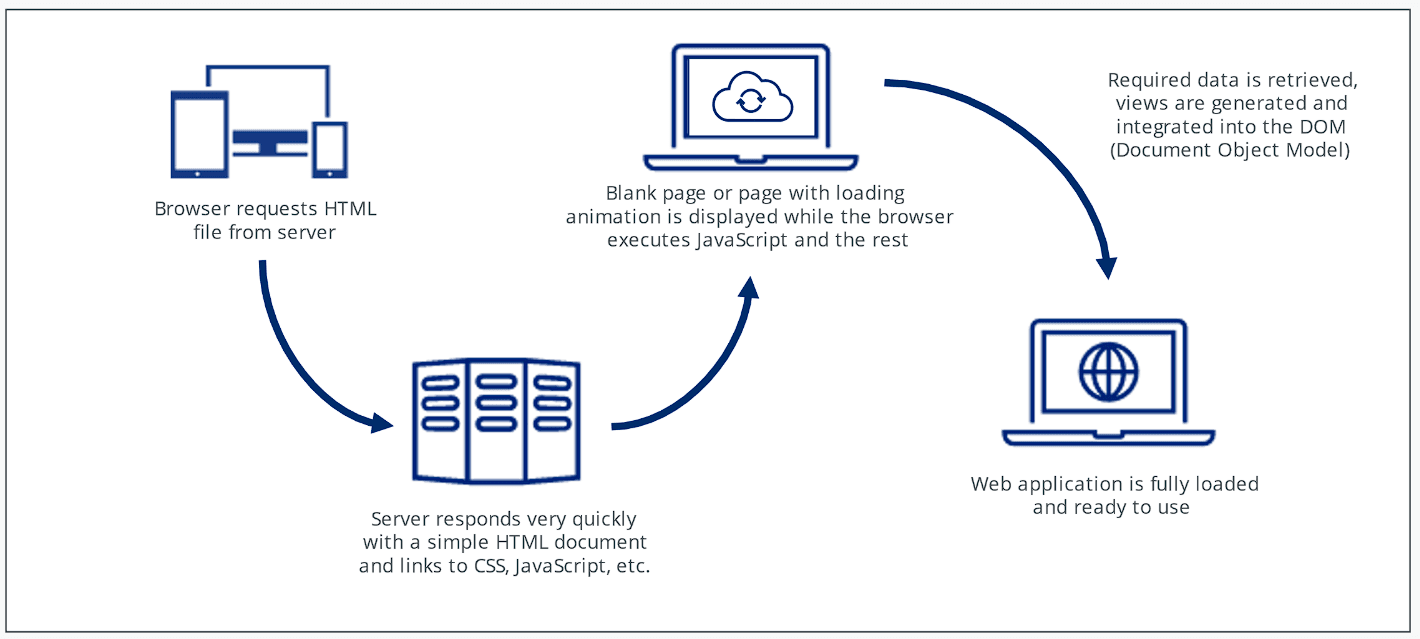
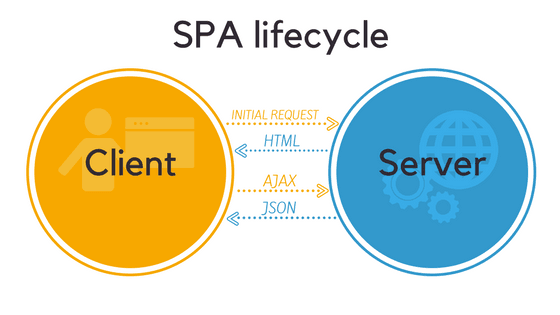

With CSR, the server does almost nothing beyond serving files.
What the user initially receives is:
-
a mostly empty HTML file
-
a large JavaScript bundle
Only after JavaScript loads and executes does the browser:
-
fetch data from APIs
-
convert that data into HTML
-
paint the UI
From a system perspective, this is a massive architectural decision.
You are saying:
“Every user device is now a rendering engine.”
Why this exists in real systems
CSR became popular because:
-
servers are expensive
-
browsers are powerful
-
APIs scale better than templated servers
This is why internal dashboards, admin panels, and authenticated apps love CSR.
Once the JS is cached:
- navigation feels instant
- data updates dynamically
- server costs stay low
But here’s the hidden cost
CSR fails silently.
If:
-
JS fails to load
-
the device is slow
-
the network is poor
The user sees nothing.
From a system designer’s view:
-
CSR pushes failure to the edge
-
The backend looks healthy while UX collapses
CSR is not bad, its selective responsibility shifting.
Server-Side Rendering (SSR):
“HTML is created per request on the server”
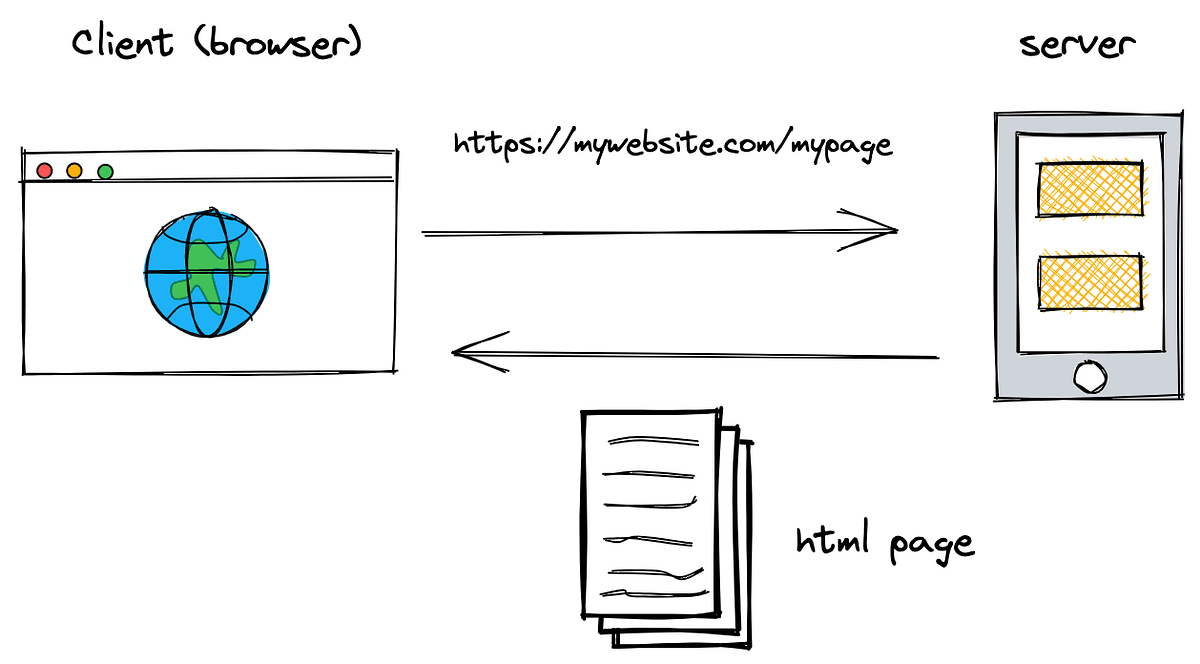
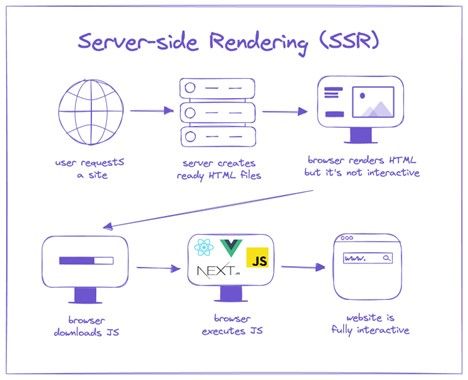
SSR moves rendering back to the server.
Now the pipeline looks like this:
Request → Server fetches data → Server renders HTML → User
The user immediately receives meaningful HTML, even before JavaScript runs.
Why systems choose SSR
SSR is chosen when:
-
ontent must be fresh
-
output depends on user identity
-
SEO matters
For example:
-
logged-in landing pages
-
personalized home feeds
-
role-based content
From a correct standpoint, SSR is excellent.
The trade-off most teams underestimate
SSR introduces request-time computers.
Every request:
-
hits the server
-
executes rendering logic
-
consumes CPU and memory
This means:
-
traffic spikes become dangerous
-
cold starts hurt performance
-
caching is complicated
A system designer sees SSR as:
“High correctness, high operational risk.”
It’s powerful, but expensive at scale.
Static Site Generation (SSG):
“HTML is created before users exist”
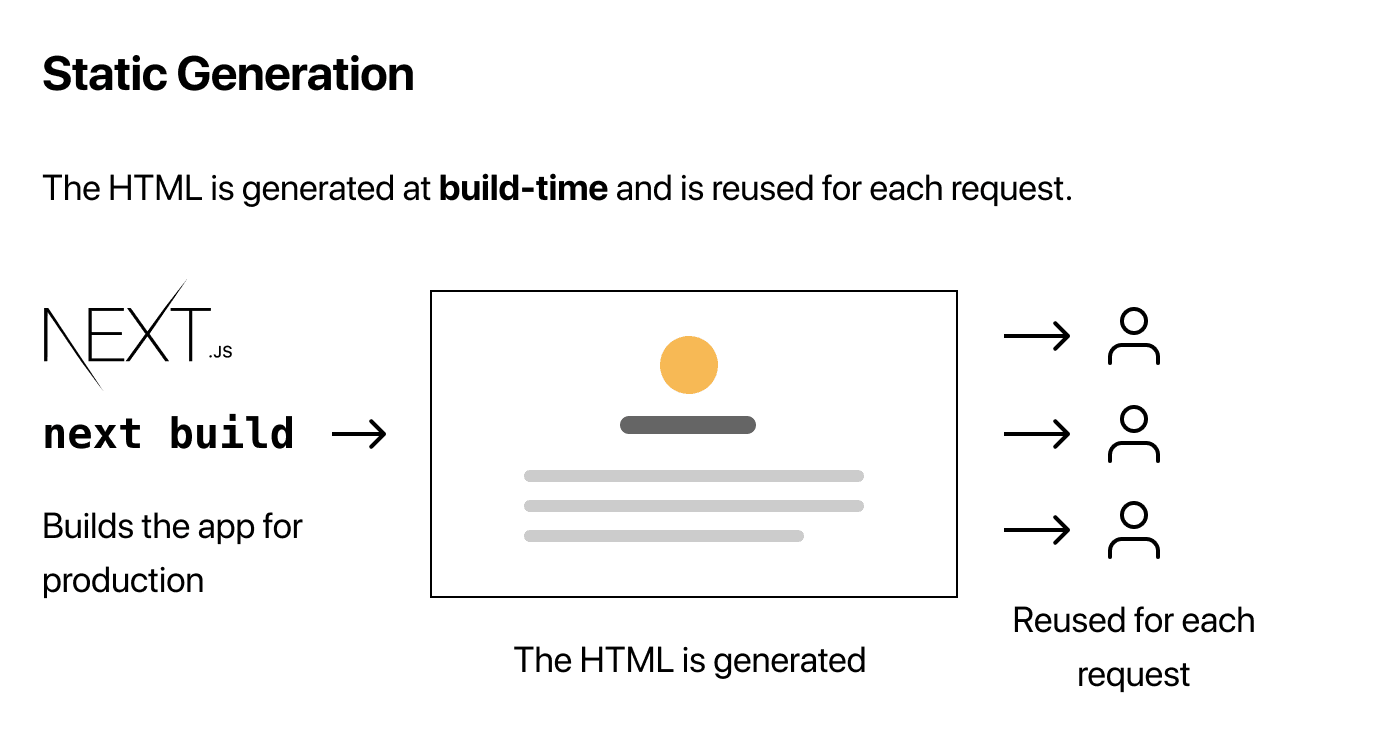
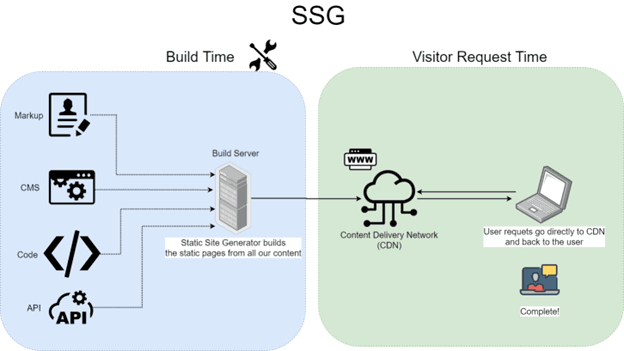
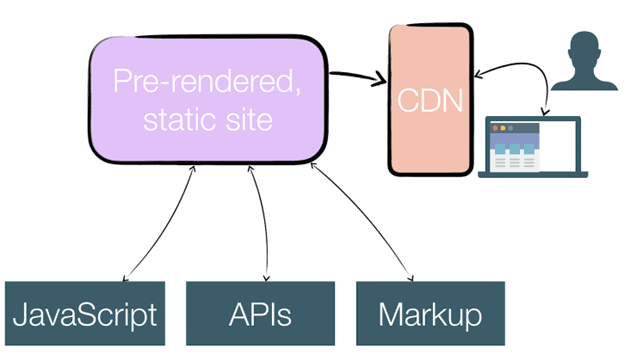
SSG changes the timeline entirely.
Instead of rendering at request time, the system renders at build time.
So the flow becomes:
Build pipeline → Render HTML → Store on CDN → Serve instantly
At runtime:
-
there is no server logic
-
no database access
-
no computation
Just files.
Why SSG is so powerful
SSG is why modern documentation sites and blogs feel “instant”.
Because:
-
CDN latency is tiny
-
HTML is precomputed
-
failures are rare
From a system perspective:
-
SSG has near-infinite scalability
-
costs are predictable
-
performance is unbeatable
Where SSG breaks down
SSG assumes:
“Data does not change often.”
If your content:
-
updates frequently
-
depends on real-time state
-
must always be accurate
Then SSG becomes painful:
-
rebuilds grow longer
-
deploys happen constantly
-
content becomes stale
SSG is not dynamic, it is strategically static.
Incremental Static Regeneration (ISR):
“Static pages with controlled freshness”
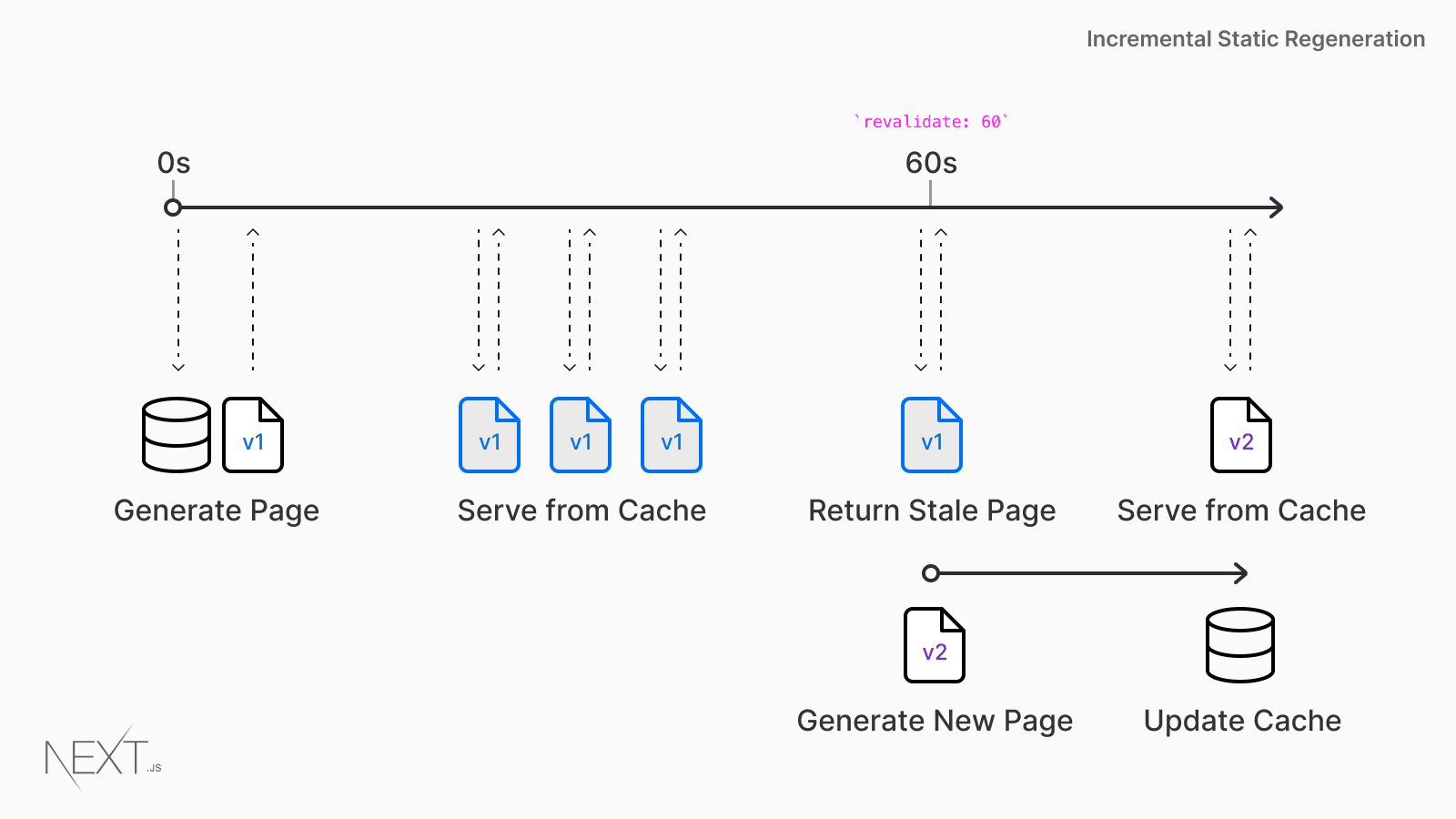
ISR exists because real systems live between two extremes:
-
“Always fresh” (SSR)
-
“Always static” (SSG)
ISR introduces a new idea:
Serve static HTML first, then fix it later if needed.
The user always gets a fast response.
If the content is stale:
-
regeneration happens in the background
-
the next user gets updated HTML
This is a system-level compromise.
Why ISR works in production
ISR is ideal when:
-
data changes every few minutes or hours
-
brief staleness is acceptable
-
traffic spikes are unpredictable
This is why:
-
product pages
-
content platforms
-
news sites
love ISR.
The cost of ISR (and it’s real)
ISR introduces eventual consistency.
That means:
-
two users may see slightly different data
-
cache invalidation becomes a real concern
-
correctness must be defined carefully
ISR doesn’t remove complexity, it moves it into time.
How system designers think about this
They don’t ask:
“Which rendering method should we use?”
They ask:
-
Where should computation live?
-
Where is failure acceptable?
-
How fresh does data need to be?
-
What happens during traffic spikes?
And the answer is almost always: use multiple strategies.
Why frameworks like Next.js exist
Not to simplify React.
But to let teams:
-
mix rendering strategies per route
-
control caching explicitly
-
treat frontend as part of system architecture
Modern frontend frameworks are orchestration layers, not UI tools.
Final mental model (this is the takeaway)
CSR, SSR, SSG, and ISR are not rendering techniques, they are ways of distributing computation across time, infrastructure, and users.
Once you think like this, the confusion disappears.
About the Author

Tarun Jat
Tarun is a skilled frontend developer at Infominez specializing in React and React Native, focused on building clean and intuitive digital experiences.
About the Author
Tarun Jat
Tarun is a skilled frontend developer at Infominez specializing in React and React Native, focused on building clean and intuitive digital experiences.